Review
The Galaxy Watch 9 is an excellent smartwatch in most respects, yet one familiar weakness, battery endurance, keeps it from being an unqualified recommendation. The findings below come from three weeks of hands-on use with the 44mm Bluetooth model, compared against a two-year-old Galaxy Watch 7.
Pricing and lineup
The 40mm version starts at $379.99 and the 44mm at $409.99, with LTE adding $50 to either. Every configuration costs roughly $30 more than the matching Galaxy Watch 8 did at launch. No Classic model exists this year, consistent with Samsung bringing back the rotating-bezel version only every other generation, so the Watch 8 Classic remains the sole option for a physical bezel.
Design and comfort
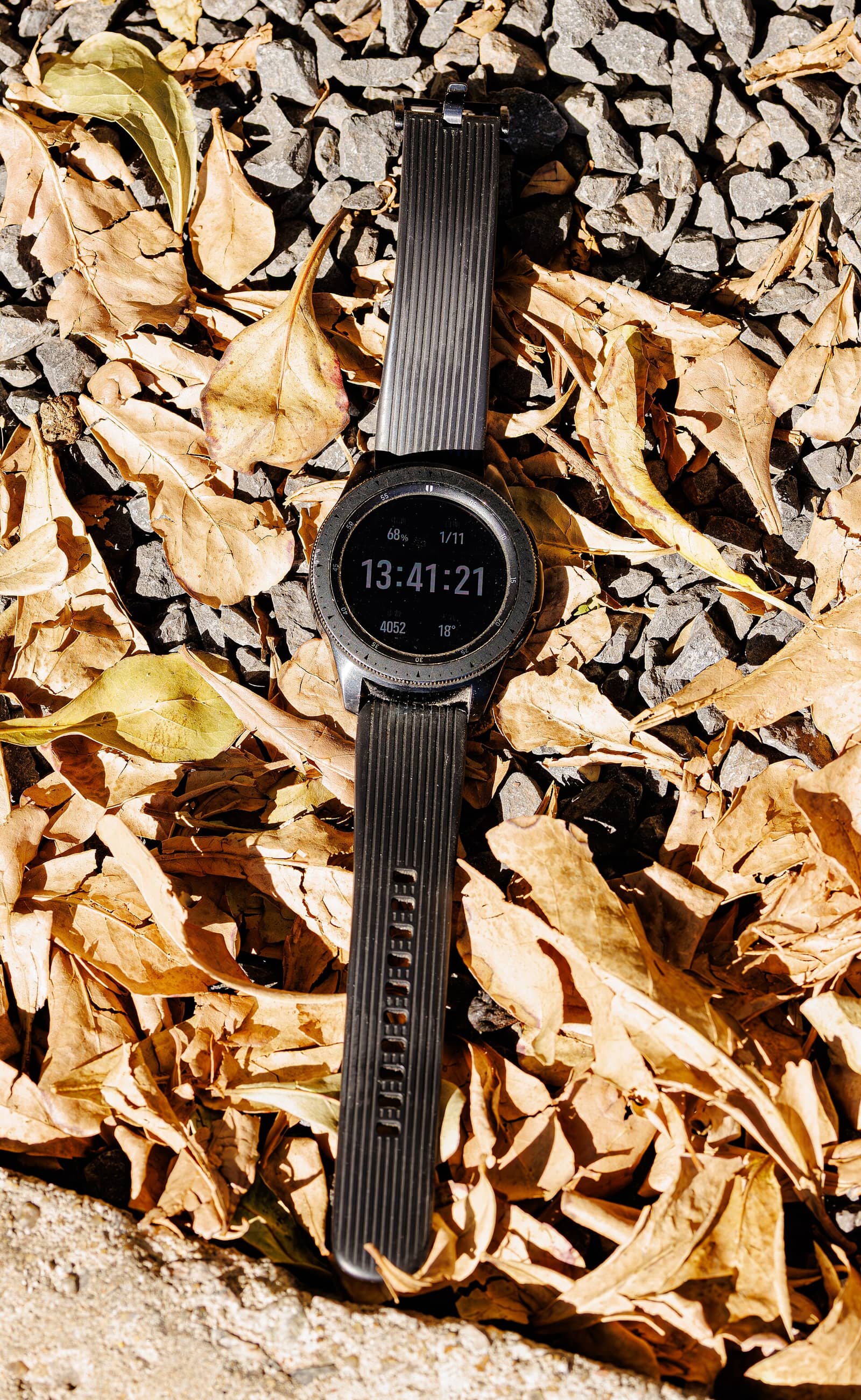
Anyone moving from a Watch 7 or earlier will first spot the squircle shape: a squared-off case around a round display, first seen on the Galaxy Watch Ultra and brought to the standard model with the Watch 8, which pushes the body out at each corner. In daily wear the eye stays on the circular screen and the shape fades from attention, though the older round design still looks better as an object. The Graphite color likely disguises the corners more effectively than the Silver unit reviewed.
The shape pays off in comfort. Extra corner space inside the case may explain why the 44mm Watch 9 is 8.6mm thick against the Watch 7's 9.7mm, while weighing 34g versus 33.8g. Its flatter underside sits closer to the wrist, and the Dynamic Lug System lets straps drop more naturally and makes swapping them very easy. Watch 8 bands fit directly, but standard bands from a Watch 7 or older do not. All of these design changes debuted on the Watch 8. The result is a watch that stays comfortable through workdays, workouts, DJ sets and overnight wear.
The Home and Back buttons remain on the right side. A Watch 7 tended to register accidental presses from the wrist during exercise, silently pausing workouts; that never happened with the Watch 9, whether because of altered button travel or the flatter case.
Display and durability
The 44mm model uses a 1.47-inch Super AMOLED screen at 480 x 480, unchanged from the Watch 8 and practically identical to the Watch 7. The meaningful difference is the 3,000-nit peak brightness introduced on the Watch 8, which makes outdoor reading noticeably easier with less squinting or wrist tilting. Sapphire crystal covers the display and has shown no scratches. The case carries 5ATM, IP68 and MIL-STD-810H ratings, so the gym, shower and pool pose no problem. With no raised lip guarding the glass against direct hits, hikers may want a screen protector.
Performance and software
The biggest hardware change is the processor: Samsung has dropped its Exynos chips in favor of Qualcomm's Snapdragon Wear Elite for both the Watch 9 and Watch Ultra 2. Tiles scroll more smoothly, apps launch faster and the small hitches that used to undermine fluidity are rarer. Against a Watch 7 the gain is noticeable rather than transformative, and the new chip may carry a battery cost.
It runs Wear OS 7 with One UI 9 Watch. Samsung promises five major Wear OS upgrades and five years of security patches, one OS update more than its previous policy. The interface will be instantly familiar: swipe down for quick settings, up for apps and sideways through Tiles. Most watch face designs are unappealing, but information density is excellent, with faces that show steps, sleep, battery, weather, heart rate, calendar, Energy Score and more at a glance.
Raise to Talk is a pleasant surprise. Lifting the watch toward the mouth starts a Gemini conversation without a button or wake phrase. It occasionally fails to trigger and sometimes freezes while launching, but overall it works better than expected for a new feature.
Health and fitness
Sensors are largely unchanged from the Watch 8. The BioActive Sensor covers optical heart rate, ECG and bioelectrical impedance for body composition, joined by temperature, accelerometer, barometer, gyroscope, geomagnetic and ambient-light sensors plus dual-frequency GPS. Samsung Health logs sleep, blood oxygen, stress, body composition and ECG, along with Heart Health Score, Fitness Index, Daily Cardio Load and Blood Pressure Trends, the last needing an upper-arm cuff. Many of these metrics are hard to act on, but Vitals is easy to grasp: it monitors heart rate, heart-rate variability, respiratory rate, skin temperature and blood oxygen overnight, compares them with a personal baseline and highlights anomalies.
Sleep and activity tracking is solid, the workout list is huge, and walking is detected automatically. Step and distance counts are not lab-accurate but are consistent enough to separate active days from sedentary ones. Basic Samsung Health works on any Android phone, though ECG, irregular heart rhythm alerts and sleep apnea detection officially require a Galaxy phone, so Pixel or OnePlus owners lose them.
Battery and charging
The 44mm battery is 445mAh, just 10mAh above the Watch 8 and 20mAh above the Watch 7, and the real-world difference is negligible. Typical use with always-on display off and under an hour of workout tracking yields about 30 to 35 hours. Heavy days drain faster: about three hours of DJing and roughly 20,000 steps left it at 15% after around 24 hours. Overnight drain also seems higher; going to bed at about 40% has repeatedly ended in a dead watch and lost sleep data. That is roughly the same as the Watch 7, which is precisely the disappointment after two generations, a bigger battery and a new chip.
Charging has not improved either. A full charge takes longer than 90 minutes, and a depleted watch gains only around one percent per minute even early on, so it is effectively unusable unless charged for at least 30 to 40 minutes. By comparison, Google rates the 45mm Pixel Watch 5 for up to 40 hours with always-on display enabled and says it reaches 50% in about 15 minutes and a full charge in about an hour, making a quick top-up before leaving home genuinely useful. The 40mm Watch 9 got a larger jump, from 325mAh on the Watch 8 to 390mAh, but Samsung quotes the same runtime for both sizes.
Verdict
Comfort, display brightness, smooth performance, a very comprehensive health platform and some of the longest software support on any Android watch make the Galaxy Watch 9 a strong choice for first-time smartwatch buyers or anyone replacing a Galaxy Watch three or four years old. For Watch 7 owners whose main wish was longer battery life or much faster charging, it delivers neither. A software update or chip optimization might eventually help, but as it stands the battery experience is likely to disappoint.
Alternatives
The Galaxy Watch 8 ($349.99) delivers about 90% of the experience with essentially the same design, display, sensors, durability and much of the software, missing only the Snapdragon chip and one year of update support; on sale, the savings make it compelling. The Pixel Watch 5 ($399) is the best polished Wear OS option outside Samsung, and its fast charging fixes the Watch 9's biggest flaw; a discounted Pixel Watch 4 ($349.99) is also worth a look. For endurance, the OnePlus Watch 3 ($269.99) offers multi-day battery with Wear OS, and the Amazfit Balance series ($299.99) lasts considerably longer if Google's apps are not needed. Samsung's own Galaxy Watch Ultra 2 ($699.99) achieves multi-day life with an 800mAh battery, at nearly double the price and with bulk to match.
Product
- Samsung Galaxy Watch 9 · Samsung
Key facts
| Brand | Samsung Source, checked 05 OCT 2026 |
|---|---|
| Product | Samsung Galaxy Watch 9 |
| Type | Smartwatches |
| Platform | Android |
Buying considerations
How we filed this product. Each link shows other reviewed wearables that share it.
Alternatives to consider
 Made4BuyersRepresentative photo
Samsung Galaxy Z Fold 8 Ultra Review: Impressive, but Hard to Justify at $2,000+
Samsung's $2,099.99 Galaxy Z Fold 8 Ultra is featherlight, fast and has a superb glare-free inner screen, but weak zoom, slow charging and dated software leave strong rivals in play.
Made4Buyers Made4BuyersRepresentative photo
Samsung Galaxy Z Fold 8 Review: The Foldable Many Buyers Have Been Waiting For
Samsung's first wide-format book foldable pairs a compact body and a media-friendly 4:3 inner display with strong battery life, held back by an IP48 rating, no telephoto lens and a $1,899 price.
Made4Buyers